Research reports
Here you can find research-based reports, produced by Global Government Forum and our partners and designed to help senior public officials both to improve their skills and expertise, and to develop their organisations’ capabilities.
Further information on the findings of the research studies can be obtained by contacting Sarah Wray, Research Editor at: [email protected]
If you would like to explore ways that you can become a research knowledge partner, please contact our Commercial Director, George O’Grady: george.o’[email protected] or call +44 (0) 20 7661 7810
Making Government Work: Five pillars of a modern, effective civil service

Around the world, governments are dealing with substantial challenges – from economic stagnation to the transition to net zero, military conflicts and cyber threats. Governments are also grappling with shifting geopolitics and the rise of populism – and all of these factors are set against the emergence of new technologies, including generative AI, which have the potential to fundamentally transform every aspect of society, but which also pose huge ethical, security and regulatory questions for the public sector.
The Making Government Work: Five pillars of a modern, effective civil service report was undertaken to help identify the key characteristics needed in a modern public service, with priorities ranging across leadership, digital service delivery, workforce development, cross-departmental integration, and citizen trust.
The report is the result of interviews with 12 senior civil service leaders from around the world, providing unrivalled insight into the challenges government face now – and how they are looking to address them.
Download the report (Published August 2024)
This report has been covered by publications around the world including the Financial Times, BBC Radio 4’s PM programme, Ottawa Citizen, Fed Manager, the Mandarin and the i newspaper.
Rewiring the state: Unlocking government transformation
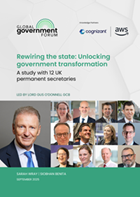
The UK government has set the directive for a “complete rewiring of the British state to deliver bold and ambitious long-term reform”. It says that a “digital revolution” will underpin the move to a more “agile, effective and active state”, focused on delivering its missions: growing the economy, an NHS fit for the future, safer streets, opportunity for all, and making Britain a clean energy superpower. It is also essential to simplifying how citizens interact with government to access more joined-up services.
This study – which was led by Lord Gus O’Donnell and includes insights from in-depth interviews with 12 UK permanent secretaries – explores the barriers and enablers to transformation in government, with a particular emphasis on the role of digital technologies and data.
The study, in collaboration with knowledge partners Cognizant and Amazon Web Services, identifies four priority areas as key opportunities to accelerate change.
Download the report (Published September 2025)
Future-proofing government digital capability
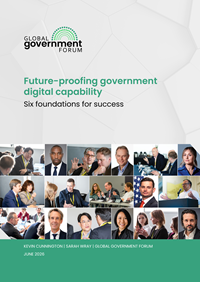
For more than a decade, governments have treated digital capability as a strategic priority, with access to digital expertise repeatedly framed as central to effective transformation.
Significant progress has been made: specialist digital professions have been created, new approaches to recruitment and pay have been introduced, training programmes have been established, and governments have reformed how they engage with suppliers and the market.
Despite this, senior leaders across very different systems continue to describe digital capability as a pressing issue and a moving target. Progress has not kept pace with the growth of digital government and at the same time, the nature of capability challenges is evolving with the rise of tools such as artificial intelligence, which are intensifying expectations and changing how work is carried out.
Governments agree on the importance of digital capability and many of the core elements required, though they can be realised in very different ways.
This study, led by Kevin Cunnington, executive advisor at Global Government Forum and former director-general of the UK Government Digital Service, identifies six common foundations that underpin the development of digital capability across governments.
Download the report (Published June 2026)
Delivering economic growth in partnership

Amid challenging financial environments, many governments around the world are focusing on boosting economic growth. This Global Government Forum study shows how success depends on cross-sector collaboration and identifies the critical factors that make cross-sector partnerships between government, business, academia and civil society deliver real economic impact.
Based on interviews with government leaders in Australia, Canada, Estonia, Finland, France and Singapore, the study explores how to make these collaborations a success and avoid common pitfalls.
It also looks at what the UK government can learn and adapt from this, given that growing the economy is one of its central missions.
Download the report (Published November 2025)
The future of the finance ministry

From setting tax rates and financial regulations that create the ground rules for national economies, to allocating – and tracking – spending for public services, finance ministries occupy an essential role at the centre of government. Geopolitical crises have reinforced the importance of finance ministries, as they tackle both immediate shocks and long-term trends such as ageing populations, the digital transition, and the impact of moves to net zero.
Against this backdrop, this global research explores what the future finance ministry looks like and how to prepare for it.
Based on interviews with 10 senior leaders from finance ministries – led by John McCarthy, chief economist in Ireland’s Department of Finance, working with Ian Hall, editor, Global Government Finance, and Richard Johnstone, executive editor, Global Government Forum – the study identifies four key themes: the evolving role of the finance ministry in response to uncertainty; the shift to more flexible finance systems that support outcomes; digital transformation and the growth of AI; and the battle for talent and trust.
Download the report (Published May 2026)
A fresh mandate for digital leadership in the NHS

This report – A Fresh Mandate for Digital Leadership in the NHS – comes at a time of great change and opportunity for the NHS, and the government has made clear that digital is at the heart of reform.
Based on interviews with chief digital and information officers in NHS trusts in England, the research highlights the systemic enablers needed to deliver NHS digital transformation – from prioritising digital as a strategic profession to resetting the role of the digital centre.
The report, led by Andrew Besford, pinpoints four key reasons why digital progress stalls and four corresponding practical steps that could help move the system ahead.
Andrew led the creation of the 2017 UK Government Transformation Strategy as deputy director at the Government Digital Service. Since 2019 he has been a non-executive director and chair of the digital committee at Northumbria Healthcare NHS Foundation Trust and recently took up the same role at Gateshead Health NHS Foundation Trust.
Download the report (Published October 2025)
Accelerating government transformation: Takeaways from AccelerateGOV 2025
More than half (53%) of Canadian public servants say their organisation’s digital capability is stronger than it was 12 months ago. A further 40% say it is unchanged, while 7% report it has weakened.
At the same time, expectations around AI are high, with 80% of those surveyed expecting it to have a significant or high impact over the next five years.
The research was carried out alongside the AccelerateGOV 2025 event in Ottawa, which was attended by over 2,000 public servants.
Writing in a foreword to the report, Dominic Rochon, deputy minister and chief information officer of Canada, Treasury Board of Canada Secretariat, said: “The findings paint a clear picture of both progress and persistent, interconnected barriers…These are not new challenges, but their continued prominence signals that addressing them will require more than incremental change.”
“I encourage readers to reflect on these findings and consider how they can be applied within their own organisations, and how they might help inspire the next phase of our collective digital transformation,” he said.
The report focuses on how to scale what works and overcome barriers to digital transformation. It includes insights from Canadian and international leaders on technology infrastructure, data and AI, skills and culture, procurement, and more.
Download the report (Published March 2026)
Empowering public servants to make confident, informed decisions with data and AI

Governments around the world are working hard to extract – and act upon – the insights held in their vast data stores, and to embrace AI and the promise it holds for innovation and transformation. At the same time, economic pressures and constrained budgets are compelling public servants to do more with fewer resources, while governments are called to respond quickly and effectively to complex challenges.
Against this backdrop, data and AI can help those working in government both to streamline their workflows and make fast, informed decisions. This in turn drives efficiency and can unlock productivity gains – and ultimately lead to improved performance and better services for citizens.
Global Government Forum surveyed over 600 civil servants worldwide to understand how data and AI are being used in government decision-making and where there are further challenges and opportunities.
Read this report for insight into how governments are using data and AI in decision-making today and the potential for the future; the major challenges to using data and AI in decision-making and how to overcome them; and how AI agents can be used in decision-making.
The report includes examples of data and AI in decision-making from countries including the UK, Ireland, Australia, Canada, Singapore, the US, and more.
Download the report (Published September 2025)
New strategies for evolving public sector fraud threats: Fighting AI with AI

Public sector fraud is increasing in frequency, intensity and complexity. This causes financial losses that impact public services and undermines public trust in government agencies.
As artificial intelligence (AI) is increasingly used to commit fraud, governments are also harnessing the technology to identify and counteract fraudulent activity.
The report includes expert insight from public servants involved in tackling fraud and showcases research from SAS on public sector fraud threats.
Download this report to understand how AI is currently used in fraudulent activities and the ways in which AI can help the public sector tackle fraud risks. It provides practical recommendations for successfully deploying AI-powered fraud solutions.
Download the report (Published September 2025)
Creating the conditions for innovation in government
Support from leaders, a culture of open communication and risk-taking, skills like adaptability, and access to the right tools and data are among the top factors that enable innovation to thrive in the civil service, research from Global Government Forum (GGF) finds.
As governments around the world are trying to innovate to drive efficiency, deliver better services and meet citizen expectations, GGF explored how to create the conditions for civil servants to innovate for better outcomes.
The research is based on panels, presentations and discussions at Global Government Forum’s Innovation 2025 conference held in London in March, as well as a survey of over 300 UK delegates – drawn from more than 3,500 event registrants – to capture civil servants’ views on how to set the strongest foundations to promote innovative approaches.
The research shows clear trends in what is considered most important for fostering innovation in government.
Download the report (Published June 2025)
From Lagging to Leading: The Opportunity for a Breakthrough in U.S. Government Digital Service Delivery

Global Government Forum interviewed 13 members of the U.S. Federal Government’s CIO Council, and the report — From Lagging to Leading: The Opportunity for a Breakthrough in U.S. Government Digital Service Delivery — provides a blueprint for the United States to reclaim global leadership on digital government.
The report provides an overview of where the U.S. Federal Government has made progress on digital transformation—and the barriers to making further progress.
The senior figures interviewed for the report — including federal CIO Clare Martorana — highlighted that clear progress has been made in government, in areas such as addressing urgent cybersecurity needs, and in successfully deploying funding through the Technology Modernization Fund (TMF).
However, the CIOs identified areas where, despite agreed priorities across the government, agencies are progressing at different rates — particularly in areas such as legacy technology modernization and skills development.
Based on these discussions, the report recommends how the next federal government can accelerate digital transformation.
Download the report (Published November 2024)
Digital Leaders Study 2024: Embedding AI across government in the UK
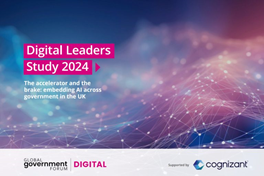
Artificial intelligence represents a potentially transformative shift for government – one that could revolutionise policymaking, national security and the delivery of public services.
The Digital Leaders 2024 report examines how ready the UK is to realise this potential. Using the 7 Lenses of Transformation as our guide, Global Government Forum and knowledge partner Cognizant interviewed 10 UK leaders in government to understand how ready the state is to transition to AI.
The report finds that, in the words of one interviewee, when it comes to implementing AI within government: “It’s like we’re driving a car with one foot very firmly pressed down on the accelerator and one foot pressed down on the brake”, with efforts underway on both standards and AI safety, and on deployment of tools.
The report highlights key challenges, blockers and actionable solutions that will help accelerate the use of AI across departments.
Download the report (Published September 2024)
Solving the public services productivity puzzle

Over the years, civil services around the world have tried a range of initiatives to improve productivity – often with mixed results. Now, more than ever, governments face unprecedented demands and must focus on fresh ways of addressing the issue.
Global Government Forum research finds that nine in ten civil servants globally say their organisation faces a productivity challenge.
In July 2024, Global Government Forum surveyed 277 public servants around the world to understand their views on productivity, the actions they’re taking, and where they see the greatest potential to drive results. The report, supported by knowledge partner SAS, also draws on expert input from senior civil servants in Global Government Forum’s network.
Read this report to understand the scale and nature of the productivity challenge facing public service organisations, the strategies they are deploying to improve productivity and where they see the greatest opportunity for further gains. The report also explores the role that technology plays in boosting productivity today and in the future, and the potential for AI to improve productivity in government organisations. It features examples from Canada, Brazil, the UK, Singapore, and more.
Download the report (Published September 2024)
Attitudes to AI in the Canada Public Service

Global Government Forum research has revealed excitement and concern among public servants in Canada over the use of artificial intelligence in government.
GGF surveyed 1,320 public servants across the Canadian federal government to measure attitudes and awareness to the development and deployment of AI.
The survey found that more than one in ten Canadian public servants have used AI, such as ChatGPT, Bard or alternative applications, for work purposes, and the research also revealed the areas where there is greatest interest – and concern – over its use.
Public servants were most interested in the deployment of AI in processing a large amount of data, with 22% excited about this potential and 29% positive about the potential. Nearly half of officials were also either excited or positive (14% and 34% respectively) about the use of AI in real-time analysis and monitoring of public service delivery.
However, public servants raised concern about using AI for recruitment (19% concerned and 17% worried) as well as in communication and responses to ministers, citizens or colleagues (20% concerned and 14% worried), and policy design work (15% concerned and 15% worried).
Download the report (Published August 2023)
Digital Leaders Study 2023: The digital leader’s toolkit

A previous GGF Digital Leaders study identified seven key challenges in civil services’ use of technology.
In this follow-up study, GGF presents three ways to address each problem – providing ideas and inspiration to help governments realise the potential of digital and data.
The recommendations cover areas including vision and strategy, skills, leadership, investment, data and governance.
The findings are based on talking to digital leaders from 33 countries, as well as the OECD, UN and World Bank to explore how nations around the world have worked to build digital capabilities and promote transformation.
Read the report (Published March 2023)
Hybrid and Remote Working Canada Public Service Survey 2023

The vast majority of public servants in Canada are working remotely for at least part of their job, Global Government Forum research has found.
An exclusive survey of more than 1,300 public servants found that 82% of Canadian public servants currently work remotely, including 19% who work remotely full-time.
GGF’s research has also revealed how much public servants value remote working. When asked to identify the most attractive benefits when looking for future employment, remote working is named as the top priority by respondents, highlighted by over three quarters of respondents (76%). Respondents rate remote working above other factors including an attractive salary, flexible working hours and a meaningful propose to their role – although all of these factors were highlighted by more than half of respondents. Over 76% of women see remote working at the most attractive benefit, only 69% of men do.
Download the report (Published August 2023)
Wellbeing in the Workplace Canada Public Service Survey 2023

A majority of public servants in Canada have experienced symptoms of burnout in the last year, according to research from Global Government Forum.
The exclusive survey also found that less than half of public servants believe their managers have a good understanding of mental health and wellbeing.
The survey was designed and carried out by Global Government Forum to measure the work-life balance of public servants across Canada, and received 1,320 responses between 5 June to 22 June 2023.
Overall, 58% of public servants rate their work-life balance as good or excellent, but a similar proportion – 57% – say they have experienced symptoms of burnout in the last 12 months.
This rises to nearly two-thirds (65%) of leaders and managers across the public service, and more women (59%) than men (53%) say they have experienced burnout.
The survey found that managers have noticed the impact of burnout on their staff. Among respondents who manage staff, 72% say that colleagues or team members have experienced symptoms of burnout.
Download the report Published August 2023)
Global citizen experience survey report

The global citizen experience survey, undertaken with knowledge partner Appian, reveals how public servants rate the quality of the services they provide for citizens – and how they rate the government and private sector services they use themselves.
The survey examined how public services are standing up to the pressures they face. The survey received 1,149 responses from government officials around the world and digs into the results from the eight most represented countries by number of respondents – Canada, Germany, Italy, Mexico, New Zealand, Spain, the United Kingdom, and the United States. The analysis provided a unique insight into the current state of public services – and where opportunities exist for improvement through digitization and automation.
Download the report (Published September 2023)
Responsive government survey

The responsive government survey, undertaken with knowledge partner PA Consulting, measures how public servants around the world rate the ability of their public service organisation to respond to unforeseen events.
This in-depth, global research into responsiveness explores the extent to which governments adapted to unforeseen events by surveying those working across civil and public services.
The two iterations of the report surveyed public servants around the world, allowing comparisons to be made about how confidence public servants are in their organsations responsiveness.
Compared to 2021, public and civil servants’ confidence in 2023 declined, with fewer officials agreeing that their organisation excels at learning and responding rapidly to change. Confidence that public services can be improved has also fallen, and officials are also less confident in their organisation’s contingency plans in the era of ‘permacrisis’.
Read the 2021 and 2023 report in full to understand how governments are responding to the pressures of modern government across topics including: rethinking responsiveness; embracing positive leadership; going deeper with digital and data; building a citizen-centric culture; and preparing for permacrisis.
Responsive Government Survey 2023
Responsive Government Survey 2021
UK civil service digital skills report

Technology has transformed every corner of our lives. From banking to shopping, and from communicating with friends to planning travel, digital services now dominate every sector – and government needs to keep up with the changing society.
However, to create the modern, digitised services that citizens expect, government needs to have the digital skills required for transformation. This requires both the digital skills in the civil service to embrace the possibilities opened up by technology – and modern technology to make sure that this potential can be realised.
To find out the scope of digital skills in government, Global Government Forum conducted in-depth research, supported by Google Cloud, to find out how UK civil servants judge both their skills, and the level of skill within their departments, across the essential digital, data and technology areas for modern government – and whether the technology available was fit for purpose for the transformation.
Download the report (Published November 2022)
Digital Leaders Study 2021: What do digital leaders need to succeed?

Around the world, civil service digital leaders have a similar set of ambitions – aiming to strengthen the evidence that informs policymaking, the tools provided to civil servants, and the efficiency, accessibility and targeting of public services. And with countries at very different stages of development, there are obvious opportunities for central digital chiefs to learn from one another about how best to pursue those common goals.
Applying the ‘7 Lenses of Transformation’ approach in interviews with seven national digital leaders, Global Government Forum investigated the biggest barriers to successful digital reforms.
This study sets out seven key findings – mapping out the essential foundations of true digital transformation.
Read the report (Published November 2021)
The civil service remote working survey 2021

Many civil servants in the UK want to continue working flexibly after the pandemic, according to GGF research.
The vast majority of UK civil servants have adapted well to remote working and want to continue working flexibly after the pandemic, according to new research – though there are concerns around collaboration, security and data protection practices.
Some 73% of respondents said they can carry out all their responsibilities while working remotely, according to a new survey of 906 civil servants conducted by Global Government Forum and Dell Technologies. A further 22% said they can do most of their work from home.
More than nine in 10 respondents said they have all the tools they need to work remotely, while four-fifths have access to all the applications and datasets available in the office. About three quarters of those surveyed said their home broadband speeds are equal to or better than those in their usual workplace; and a similar proportion said they feel as well managed as they do when in the office.
Asked whether they’d like to work remotely more frequently in the future than they did prior to the pandemic, 82% of respondents agreed – with two thirds of them saying they “agree strongly”. Moreover, 72% said that doing so would improve their wellbeing. Most also felt that this would increase civil service productivity, with 59% saying they’re more productive working remotely; just 16% said that they’re less productive.
Download the report (Published April 2021)
Further information on the findings of the research and surveys can be obtained by contacting Sarah Wray, Research Editor at: [email protected]
If you would like to explore ways that you can become a research knowledge partner, please contact our Commercial Director, George O’Grady: george.o’[email protected] or call +44 (0) 20 7661 7810